Monday, 24 March 2014

Search Associates Job Fairs

I attended the Search Associates (SA) Spring Fair in Bangkok this past week. What a learning experience! It was one of the most stressful weekends of my life. It is almost a week ago and I am still not over it. I hope this blog post will help you if you are considering using Search Associates or International School Services to find a teaching or administration job overseas. The Spring Fair is much smaller than the earlier Bangkok Fair in January. We were not eligible to attend the January Fair as my wife was considered a non-teaching spouse and I did not have PYP experience. Schools tend to look for candidates who are: (1) Teaching Couples (2) Single (3) Teacher with dependents. Going as number 3 and without PYP experience I was not in the best position.

According to SA 50% of candidates jobs come from job fairs while the other 50 come from connections made with schools through their site. It is very important to get to the fair as early as possible and to be in constant communication with your associate prior to and during the fair. I was particularly blessed having John Ritter as my associate as he really knows his stuff and tells it straight. If you would like to contact John his email is jritter@searchassociates.com, I would highly recommend him as he has been principal for a number of big schools and is a pleasure to work with. Again, he really knows his stuff.


I arrived to the fair at about 4:00pm on Friday afternoon, meaning I missed all the school presentations. When I came in, I saw the associates with their backs to me as in the photo above. I immediately introduced myself to John and asked him to get me in the game. Up to this point we had just been in contact (a lot) by email. He told me to check my mailbox. Each school and each teacher has a mailbox where they can communicate with one another.

On Friday night they have the "sign ups". All the schools are at a table in a big ballroom. You then go around the room and ask if you can have an interview. If you have a slip in your mailbox from a school you get to go to the front of the line to ask for an interview. You use a schedule sheet to timetable in as many interviews as you can handle. I had about six scheduled for Saturday.

After the sign ups, I went back to my hotel to bed. Saturday was full on with the interviews. Most of them took place in hotel rooms, some at the bar. It was very interesting to see which schools were well organised and which were not. Common questions I was asked were: What would your classroom look like? How would you plan and deliver a unit of inquiry? How do you use technology in your class? Why did you become a teacher? Why do you want to live in ..... and other such questions.

I asked the same questions about the package school's were offering as getting benefits for my family was a priority for me. I had already identified all the school's I was interviewing with as being schools who teach the PYP. I later learned that whether the school is "for profit" or "not for profit" is a very important point. Another important question would be how stable is the board that runs the school. That night there was a social event where candidates and recruiters met. This is a place where jobs are sometimes offered. It is very important to remember that with SA a verbal offer is considered binding. If you break a contract you may be blacklisted from their site and fairs.

The following day we waited to hear from the schools. As you can imagine, offers were given, usually through your mailbox. Little notes were dropped in if you did not get the job. This was tough as candidates were let down and you could see it on their faces. I was delighted to come away with a great job and am looking forward to our move to China next year. Overall the experience was great, as I said I learned loads, but boy was it stressful. I hope this helps somebody before going to your first fair. 

Sunday, 16 February 2014

Vietnam Technology Conference 2014

"Wow!" is all I can say! It is Sunday evening and I am buzzing from all the learning. This year the United Nations International School of Hanoi and Saigon South International School of Ho Chi Minh City teamed up again to deliver one of the best professional development opportunities of the year. There were more than fifty workshops, a couple of hundred participants and a great key note speaker. Here is the conference website.

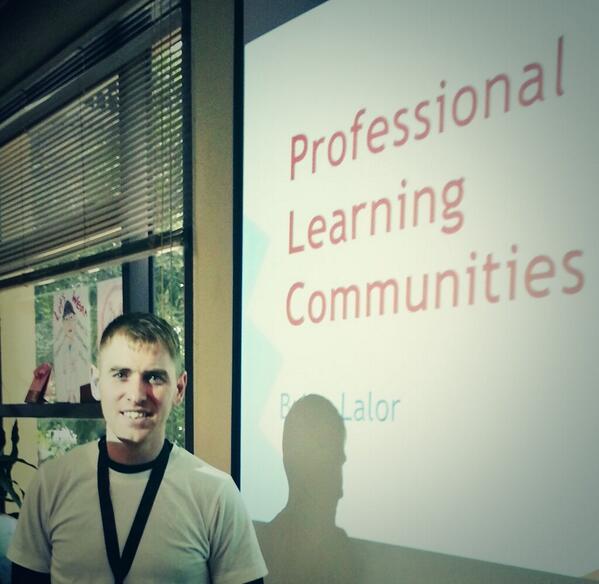
I delivered my workshop on professional learning communities during the first session on Saturday. My resources may be found here.

Embedded image permalink

Gary Johnson came up from SSIS for the conference and I got to attend his workshop on Google Scripts. If you are familiar with the TV show, The Wire, they refer to McNulty as "Real Police". Well Gary Johnson is "Real Teacher". He taught us some very useful Google Scripts and his materials may be accessed using the above link.

Patrick Green was the key note speaker and he opened the conference with his presentation, 'The Relevant Teacher'. A sample of what he was speaking about may be viewed here. He then led two workshops. The first was on YouTube and the second on Google Maps. Again, what can I say except that they were incredible. If your school is not using Google Apps For Education (GAFE), which is free, you are doing your students a disservice in this day and age.

The final session I attended was by Pete Kennedy. He gave an excellent presentation entitled 'Driven to Digital Distraction'. Pete showed us the dangers of multitasking and his materials will be available here soon.

A huge thanks to everyone involved in the conference and forgive me if the tone of this post is a bit different to my usual. As I said, I am buzzing off the learning right now!

Wednesday, 5 February 2014

Parent Communication

At a recent meeting of the Hanoi Technology Group, one of my colleagues brought up the theme of parent communication. My belief is that teachers are not the primary educators students have in their lives. Teachers spend a large portion of time with students, but the majority of time and teaching should be spent with family. As the primary caregivers, parents are the main teachers in the lives of our students. I would like to use this space to suggest ways to empower parents to teach their children, our students.


At my school, one of the ways we empower parents is by providing as much information and training to them as possible. Some of the ways we communicate with parents include:
  • Sending class timetables home at the start of each week.
  • Using communication books and email for teachers and parents to write messages to each other. It is important to find the means of communication that best suits the individual parent. Some parents are more technologically comfortable and prefer emails to their phone while others will prefer more traditional means of communication.
  • Holding exam information evenings when exams are approaching. These evenings give parents detailed information on the exam process as well as strategies to support their children as they study at home. 
  • Holding coffee mornings where parents may come in to meet with school leaders. These are usually structured around a curriculum theme. 
  • Having a parent/teacher information evening each term. This is a form of communication I personally like to employ and I am currently planning one to explain our reading program in the early weeks of Term 3. 
  • Holding parent/teacher conferences to keep parents up to date with student progress.
The above list takes a lot of time and effort on the part of the teacher. However, keeping parents informed on what is happening and giving them strategies on how to teach their child is well worth the effort. In my opinion, teaching is not a nine-to-five job. I give my email and telephone number to my students and their parents so they can get in touch with me should they have any issues. This has always helped me to build trusting relationships with my students and their parents. 

Tuesday, 1 October 2013

Reading Levels

Reading A-Z

My school has been using Reading A-Z for a number of years. It is a useful way of tracking students' reading and comprehension as they progress through the different classes. The lower level books begin at A and are suitable for students in the first grade. Each level becomes increasingly more difficult all the way up to Z, which would be around fifth grade, depending on your school system. Reading A-Z provides this correlation chart for parents, teachers and students in order to keep track of the individual's progress. It is important to note that this system is designed for students whose first language is English. The chart also contains the Lexile index range for each book. This is a scale educators use to determine the appropriate reading age of a book for a child. It is particularly useful when buying books as gifts!


Running Records

Running records serve two main purposes:
  • They are used to match students to books that are written at their instructional reading level.
  • They are used to determine whether or not students are ready to exit their current levels and move to the next ones.
Reading Groups


Perhaps the most useful teaching tool I have gained from the Reading A-Z program has been reading groups. During these times, I will divide my class up into groups of four to five students. I will then assign the same book to each student in the group. The books are as near to the child's reading level as possible. I then have the students read a page of the book each until the book is finished. After they have read the book, I will have a retell activity or a discussion on the story. 

I hope this is useful to somebody out there!

High School Youth Retreat

High School Youth Retreat


Last weekend, my wife Kirsten and I took twenty-two high school students on weekend retreat. We went to the beautiful countryside of Hoa Binh, about two hours southwest of Hanoi. We left Hanoi on Friday evening after school and travelled by bus to Hoa Binh. Our friend, Michael Ong from Tea Talk, came along and taught the group on Friday night. Michael spoke about community and the need to work together. He also had us play a fun game where we were required to work together to solve a problem.


Saturday was a lot of fun with some more teaching in the morning before games of frisbee, a walk through the nearby creek, a buffet and a bonfire. The students then led a worship session for two hours that night. It was excellent; under the stars, away from the city, connecting with the LORD, surrounded by his creation. 


The highlight of working with this group for me has been seeing the students learn to lead Bible studies and develop into leaders. I am always so proud when I see them lead studies and step out in faith in order to help others. This trip was very much an inreach event where we grew stronger as a group. The next step will be another outreach event where we can go out and serve our community. 

Monday, 2 September 2013

Symposium Towards a Learning Society

Symposium: Towards a Learning Society


On August 22nd and 23rd of this year, I had the honor of attending a learning symposium organised by VVOB and the Ministry of Education and Training (MOET). The aim of the symposium was to bring educators from all over Vietnam together to share best practices. The topics ranged from development, community and family to special needs. All the presentations are available here. Each presenter had to submit a paper and, when these are available, I will share them also. 


The symposium was divided into four themes:
  1. Students
  2. Teachers
  3. Managers
  4. Parents & Communities
I presented in Session 2 on Professional Learning Communities (PLCs). I have been researching into this topic for a couple of years now and wrote my thesis on it. There will be a blog post coming on the findings of that research. My presentation was intended to encourage educators to develop PLCs in their schools. They are an area for teachers to come together to share their knowledge. When implemented correctly, PLCs impact school culture in a positive way. 


I would highly encourage anybody out there who is doing a Master's degree to write your papers in such a way as you can submit them for similar events. It is a great opportunity and, again, a way to kill two birds with one stone. 


Thursday, 6 June 2013

Twitter for Teachers


(Image courtesy of Creative Commons)

I love learning! My primary source of professional development over the past ten years has come from university courses. With the going rate for an international student being around 2000 dollars per unit, quality learning can be quite expensive.

Recently at the Vietnam Technology Conference, I was introduced to Twitter. Now, up to this point, I was extremely skeptical about social media. I had noticed how people were wasting hours on Facebook and was determined not to do the same.

At the technology conference, I saw for the first time how Twitter can be used for educational purposes. The key to it all is to create an account strictly for professional use. Identify quality educators to follow and learn from them. It is also important to share your successful lessons too, thus creating a professional learning network.

The same applies to other professions. If you are a manufacturing engineer, follow people in the same field. If you are a doctor, look for other doctors to learn from. For more information on how to set up a Twitter account, check out this guide from Edudemic which includes a video by Erin Klien. They have done a much better job of explaining Twitter than I ever could.

Follow me @brianlalor.